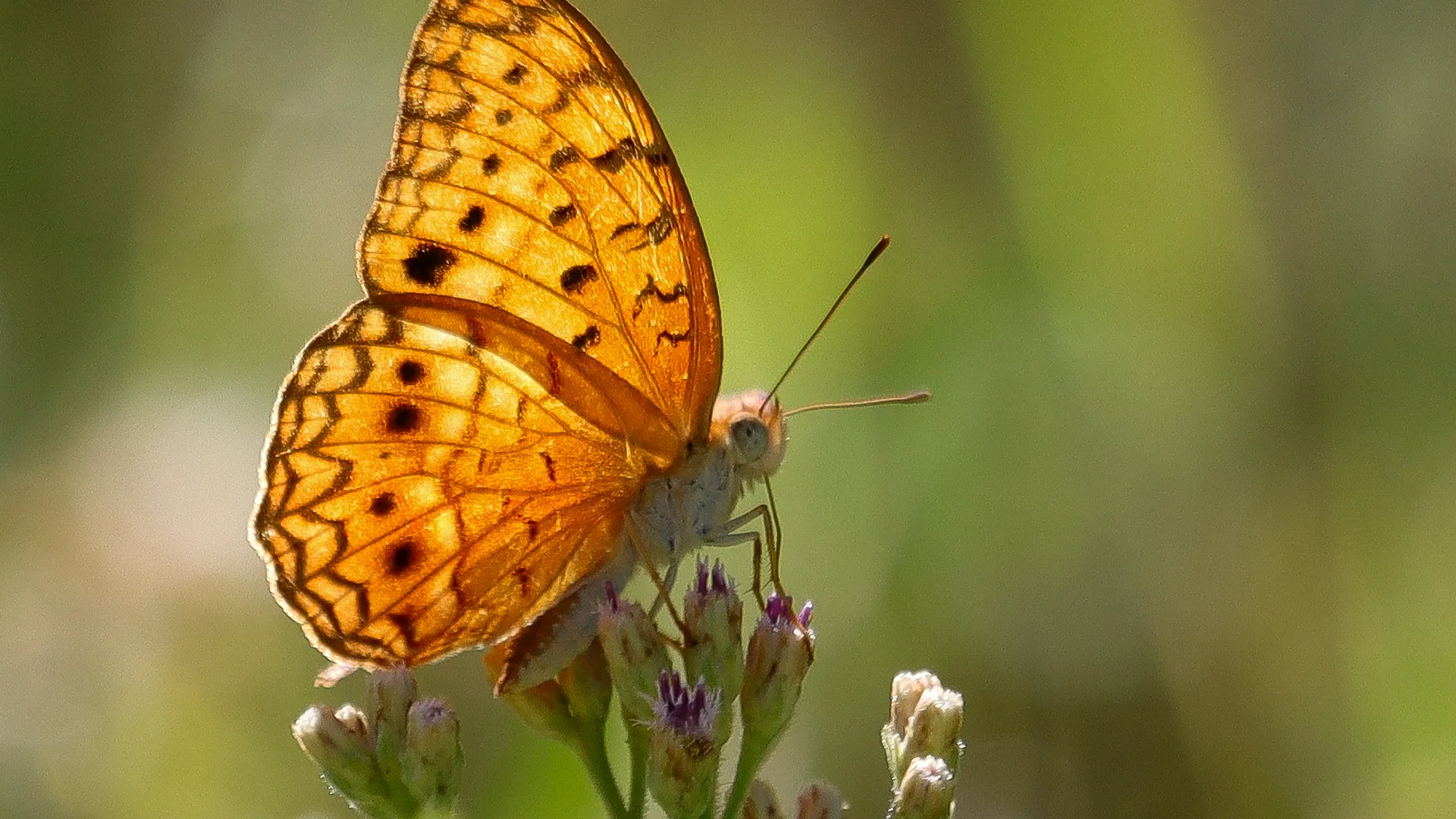
Luvhondo — Limpopo, South Africa
Looking through the bush: the butterflies of Luvhondo
August 18, 2026Few & Far Luvhondo
Experience
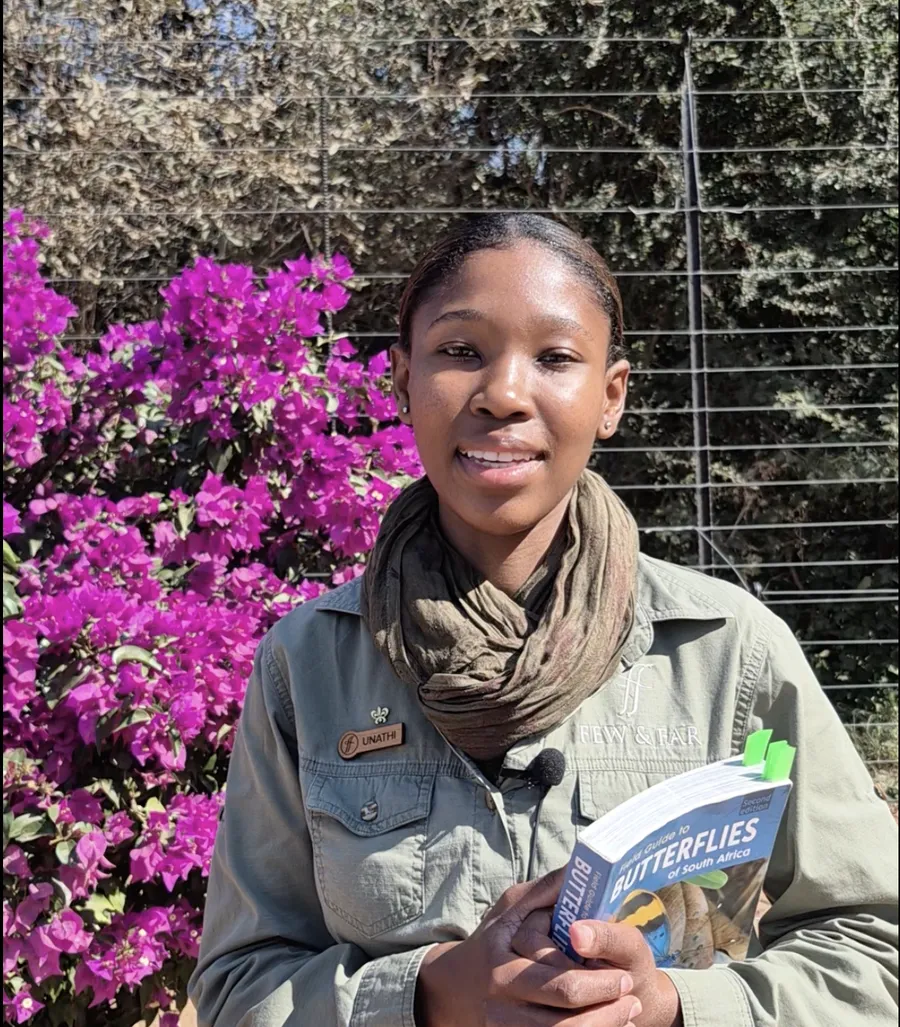
Field guide Unathi Makwange stands in front of a sprawling bougainvillaea bush at Paradise Farms, the agricultural heart of Few & Far Luvhondo, where the lodge grows most of its own vegetables.
Dozens of butterflies flutter through the bright pink branches. She holds a heavy, well-worn book in her hands, Field Guide to Butterflies of South Africa, which bristles with green sticky notes marking out pages.
“This book is my bible,” she says, tapping the dog-eared cover. “I don’t lend it to anyone!”
A flash of bright orange and black cuts through the air and lands on a leaf nearby. It is an African monarch.
“Don’t look at the bush,” Unathi advises as we try to hold the butterfly in our sights. “Look through the bush.”
This simple shift in perspective changes everything. Suddenly, the bush comes alive with movement. A garden that seemed quiet just moments ago reveals a thriving, intricate ecosystem operating right at eye level.
The Soutpansberg mountain range is a fortress of biodiversity. While many travellers focus their energy on tracking massive predators, the true health of an ecosystem often beats in the smallest wings.
Unathi notes that guests can spot over 250 different species of butterflies across this reserve.
“That number lets us know exactly how healthy the ecosystem is,” she explains.
A barometer for the wild
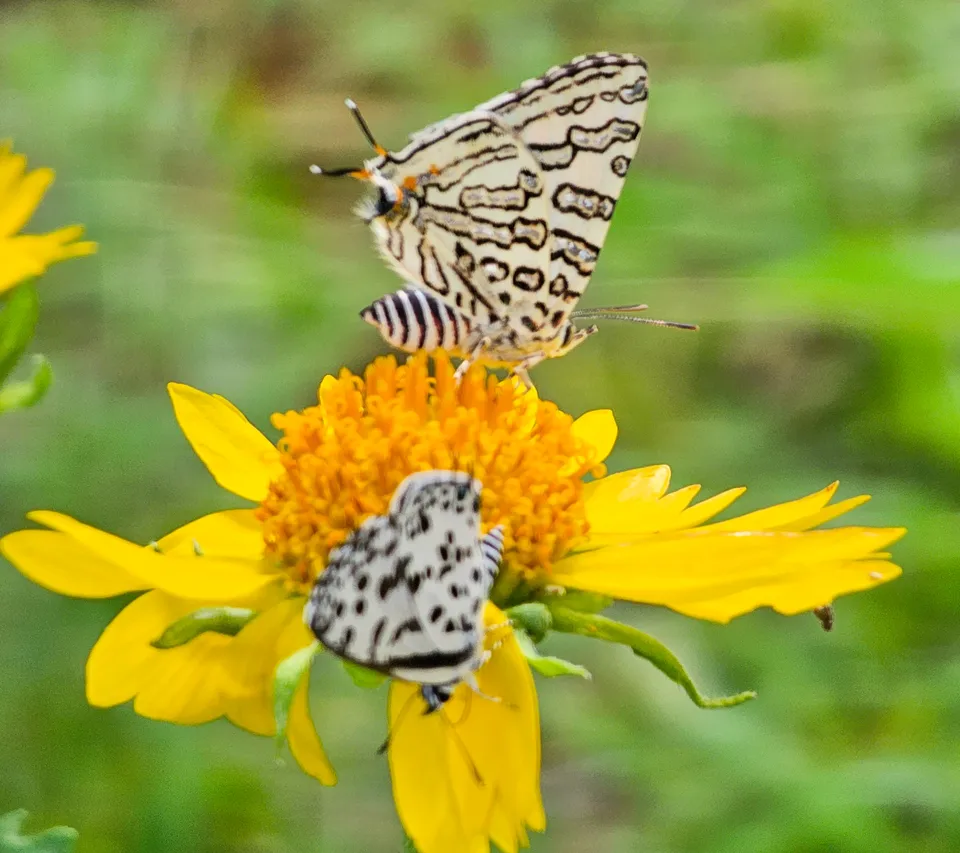
Almost every butterfly species relies on a specific host plant to feed its caterpillars. The wide variety of butterflies here proves that the indigenous plant life of the Soutpansberg is flourishing. Even in the dry winter months, when flowers are scarce, the continued presence of these creatures confirms the richness of the soil and the success of active conservation.
Protecting these insects requires physical, hands-on work. When the conservation team pulls invasive saplings and restores native flora, they directly secure the food sources for these delicate species. This restoration work drives Few & Far Luvhondo’s 50-year mandate to protect 100 000ha of this mountain landscape.
For Unathi, the connection to these creatures runs deeper than ecological science. Growing up in the concrete jungle of Pretoria, the wild felt distant. But when she lost her stepmother, a specific visitor began to appear in her life: an African monarch would repeatedly cross her path, arriving in moments of both sadness and joy. It became a quiet, living reminder that she was going to be okay.
When Unathi relocated to the Limpopo bushveld to begin her guiding career, the sheer volume of the wilderness felt overwhelming. She found her anchor in the trees, studying their bark and leaves, which naturally led her to the caterpillars that feed on them. After completing a specialised course, she claimed butterflies as her ultimate passion.
Her spirit butterfly, the African monarch, is a master of survival. Its striking orange, black and white wings act as a warning to predators. As a caterpillar, it feeds on toxic milkweed, absorbing the plant’s poison to render itself inedible. It navigates the harsh environment openly, protected by the very landscape it consumes.
The life cycle of the citrus swallowtail
When you walk the trails at Few & Far Luvhondo, you don’t just observe nature from a distance; you participate in its rhythm. Unathi teaches guests to stop, sit quietly and let the wild adjust to their presence. Once you settle, the butterflies will eventually land on the rocks and branches right beside you.
She often leads guests to the white ironwood trees scattered across the reserve. If you carefully turn the leaves over, you might find the tiny eggs of the citrus swallowtail. Unathi once gathered a few of these eggs to study their metamorphosis. She watched the caterpillars emerge, undergo several moults, pupate into a chrysalis and finally break free as bold, striking adults.
Witnessing that entire life cycle cemented the citrus swallowtail as her favourite discovery on the reserve.
A safari for the curious
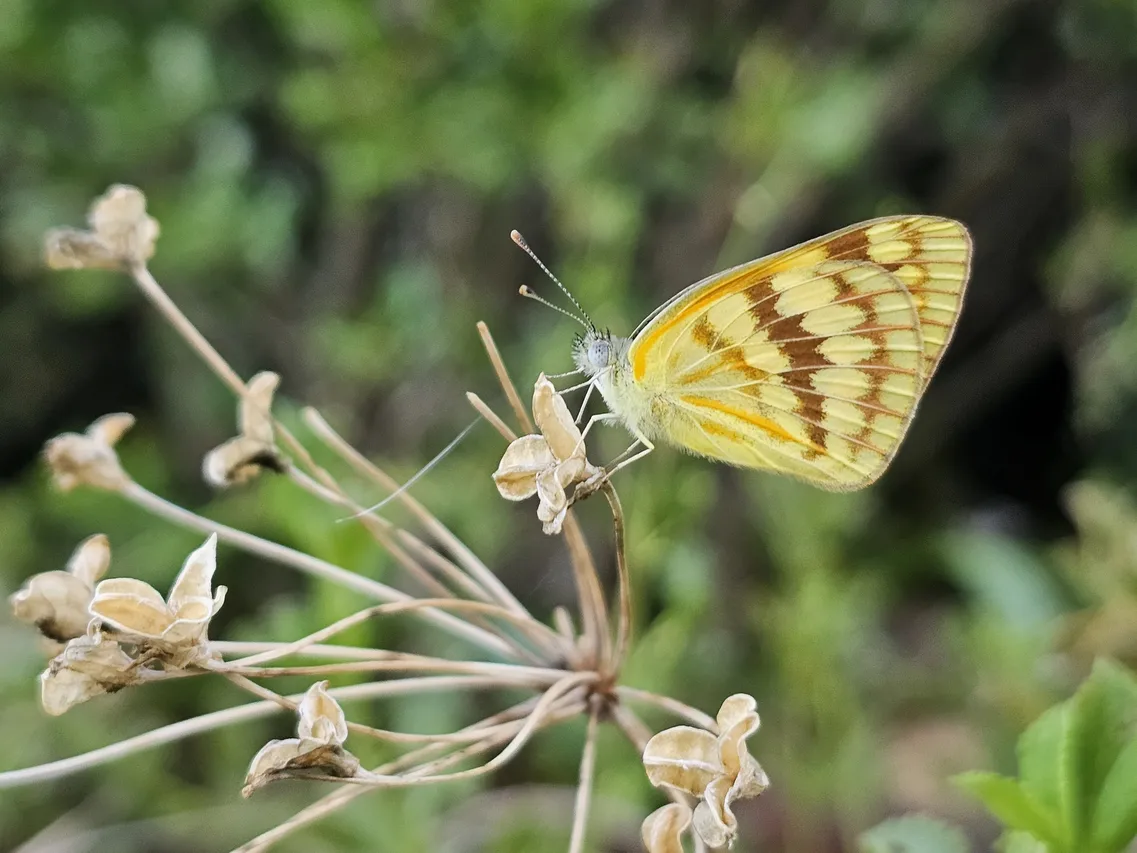
A safari here asks you to slow down and notice the microscopic details that sustain the macroscopic world. It is about tracking the flight path of a swallowtail, feeling the gravel under your boots and understanding that every living creature plays a vital role in this ancient ecosystem.
When you venture out with our guides, you actively engage with the land. You will:
- Track elusive wildlife through crushed plants
- Identify rare host plants critical to local insects
- Sit in silence as the forest adapts to your presence
The Soutpansberg rewards those who take the time to look closely.

Related Stories
Two Michelin Keys for the forgotten mountains
I am not sure there are many moments in building something from scratch that stop you in your tracks quite like this one.Yesterday, as I boarded …

The secrets of the baobabs
The morning air in the Soutpansberg is sharp. Assistant head guide at Few & Far Luvhondo Moses Maponya stops on the red sandstone trail, boot…

Wild mountains and island shores
Some journeys ask you to choose. Mountains or ocean. Adventure or rest. The thin, electric air of high country or the slow heat of an island afte…
From burnout to breakthrough
Most leaders I know are tired in a way that sleep does not fix. It is not the tiredness of long hours. We made peace with those a long time ago.