
Luvhondo — Limpopo, South Africa
The secrets of the baobabs
August 20, 2026Few & Far Luvhondo
Experience
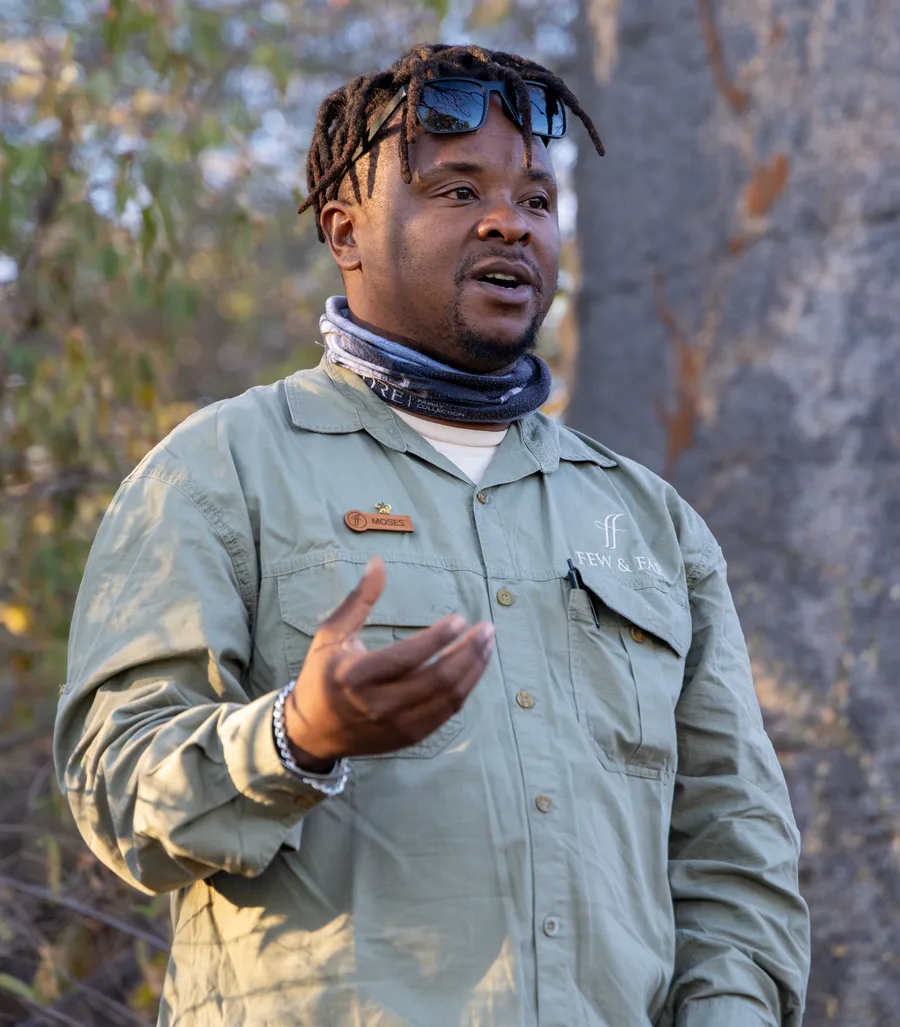
The morning air in the Soutpansberg is sharp. Assistant head guide at Few & Far Luvhondo Moses Maponya stops on the red sandstone trail, boots planted in the dust, and rests his hand against a bark wall the size of a small house.
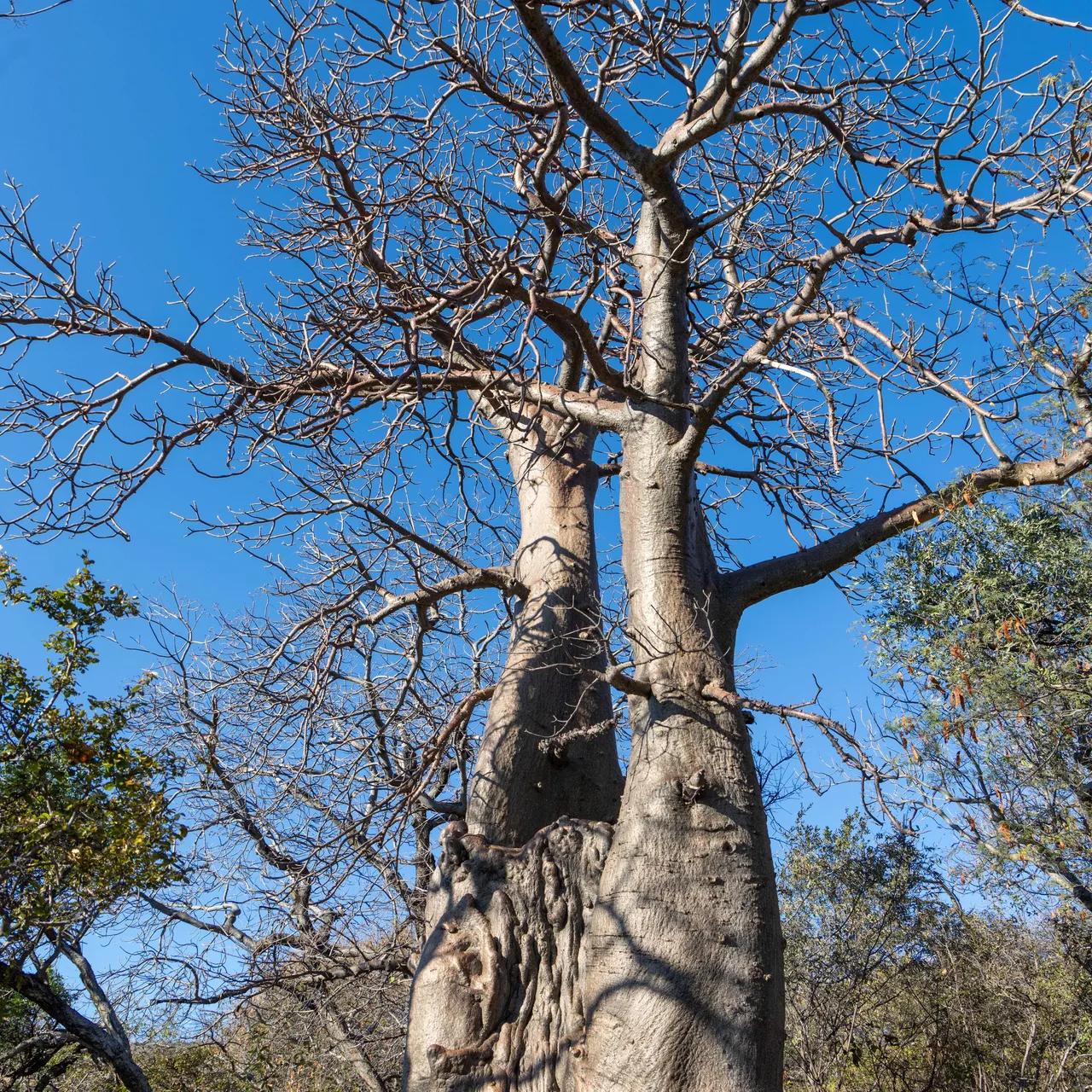
He looks up into the sprawling branches that claw at the blue sky.
Traditional folklore suggests the gods became angry with the baobab and planted it upside down. Looking at the bare winter branches, it is easy to see exactly why they resemble a massive root system grasping at the heavens.
Moses guides us through a cluster of trees he identifies as a family, pointing out how the younger baobabs grow in the protective immediate vicinity of an ancient central trunk. Beneath the red soil, their root systems connect. They stand together, a quiet reminder of the deep connections that sustain life across this reserve.
“It takes hundreds and thousands of years to get to this size,” he says.
“This tree might be 3 000 years old. Older, maybe.”
You cannot count rings to age a baobab. Because their trunks grow by producing new layers of wood over the old without standard annual rings, scientists rely on radiocarbon dating to determine their true ancient age.
A single baobab acts as an entire micro-ecosystem.
Their longevity is matched only by their stubborn refusal to grow. Baobabs are notoriously difficult to propagate. Their seeds are encased in a thick, woody shell that requires extreme conditions – like scorching temperatures or passing through the stomach acids in an animal's digestive tract – to break open. They demand consistent, intense heat to germinate.
Every towering giant we walk past is a triumph of survival.
Survival in the sandstone
A single baobab acts as an entire micro-ecosystem. Their sheer size and natural hollows provide shelter for hundreds of species, from reptiles and insects to massive bird nests.
Their flowering is an effort in itself. Baobab flowers open exclusively at dusk, last for just 24 hours and rely on nocturnal creatures like fruit bats and bushbabies for pollination.
These trees master harsh environments like the hot, dry climate in Limpopo province. Moses explains that baobabs are essentially massive succulents. When the dry season hits and water becomes scarce, they rely on the immense moisture reserves stored inside their fibrous trunks.
Their exterior is built for resilience. Unlike most trees, a baobab can survive having its bark completely stripped by animals. The fibrous armour is remarkably fire-resistant and simply heals and regenerates itself over time.
Guardians of the Venda people
For Moses and the local communities, the baobab provides far more than physical sustenance. It serves as a living monument.
Centuries ago, in the villages scattered across this Venda region, traditional chiefs and community leaders were laid to rest inside the natural hollows of the oldest baobabs. This process did not kill the tree. The baobab would simply heal, its fibrous bark slowly regenerating and enclosing the remains within its living core. As you walk through the reserve today, you never truly know if the ancient giant towering over you is a living tomb.
To cut down a baobab is to erase a chapter of human history.
“If we keep on destroying, destroying, destroying, we’ll end up forgetting what our forefathers or our ancestors used to believe in,” he says. “And also what they used the trees for.”
Moses says baobabs were regarded as sacred trees. Meetings held under them and decisions taken were perceived as auspicious. They were also believed to have medicinal properties.
This deep reverence for the land mirrors our mission at Few & Far Luvhondo. We hold a 50-year mandate to protect 100 000ha of this exact landscape. We actively restore the habitat and work to sequester 100 000 tonnes of carbon annually so these ancient giants and the wildlife they sustain can thrive for millennia to come.
The real meaning of safari
At Few & Far Luvhondo, a safari is not a frantic dash to tick off a checklist. It is a deliberate unravelling of expectations. Moses watches guests arrive with their minds set on spotting big predators, only to see them leave fundamentally changed by the quiet presence of a tree.
He teaches guests to step out of the vehicle and actively participate in the bush. When you walk these trails, you:
- Track wildlife through the crushed wild sage
- Forage for indigenous plants that our chefs will prepare for your dinner
- Learn the medicinal uses of the leaves beneath your feet
“When I started working here, I learned that not everything is about big animals,” Moses says.
“It is about understanding what you have and building the experience around those amazing things.”
He leads us away from the giant and deeper into the forest, pointing out fresh leopard tracks pressed into the soil. We listen to the call of the trumpeter hornbill and keep our eyes peeled for a flash of movement.
But the baobab stays in our minds long after the walk is over. It stands as a reminder that the wild does not perform for us; it simply invites us in. You just have to know how to look.

Related Stories
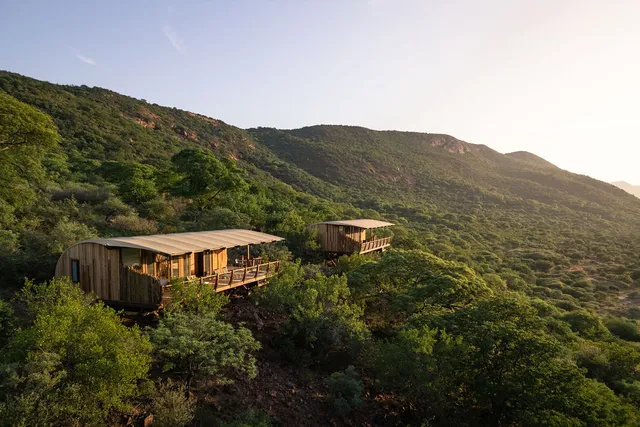
Two Michelin Keys for the forgotten mountains
I am not sure there are many moments in building something from scratch that stop you in your tracks quite like this one.Yesterday, as I boarded …
Looking through the bush: the butterflies of Luvhondo
Field guide Unathi Makwange stands in front of a sprawling bougainvillaea bush at Paradise Farms, the agricultural heart of Few & Far Luvhond…

Wild mountains and island shores
Some journeys ask you to choose. Mountains or ocean. Adventure or rest. The thin, electric air of high country or the slow heat of an island afte…
From burnout to breakthrough
Most leaders I know are tired in a way that sleep does not fix. It is not the tiredness of long hours. We made peace with those a long time ago.